The Unsung Hero of Eternia: Remembering Roger Sweet and the Legacy That Deserves More
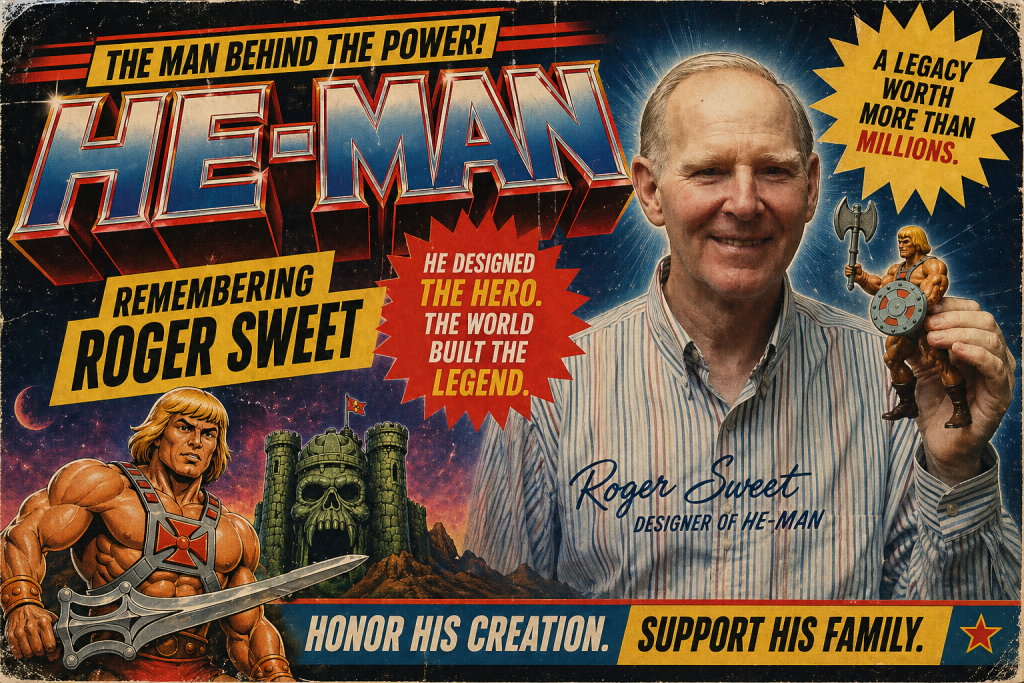
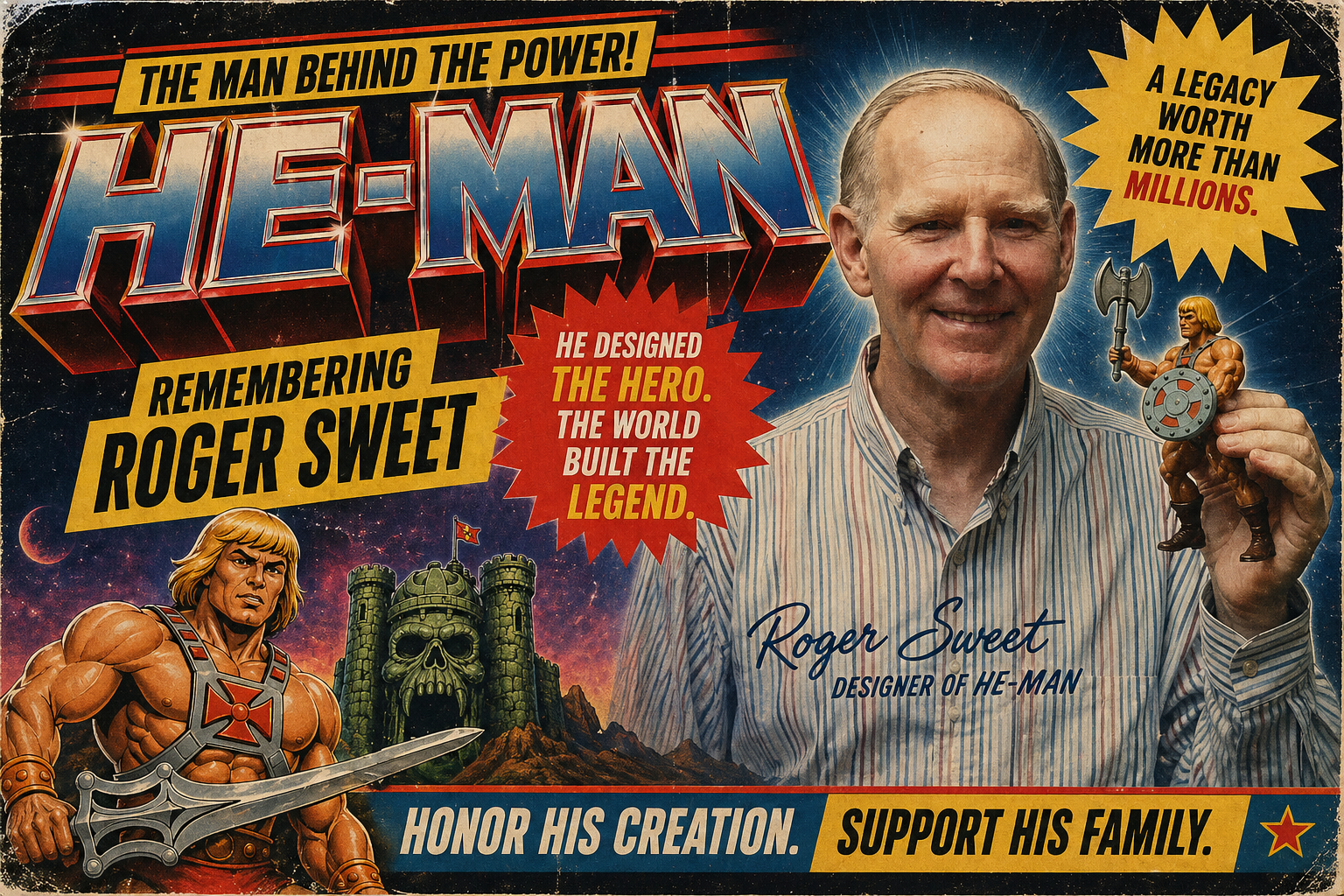
The world of toys and pop culture lost a true visionary with the passing of Roger Sweet, the man widely credited with helping bring He-Man to life. For millions who grew up in the 1980s, He-Man wasn’t just an action figure—he was a symbol of strength, imagination, and adventure. But behind that iconic hero stood a designer whose contributions have never fully been rewarded in proportion to their cultural and financial impact.
Roger Sweet was a lead designer at Mattel during a pivotal time in the early 1980s. Tasked with developing a new action figure line to compete in a rapidly evolving toy market, Sweet created a concept that would become the foundation of Masters of the Universe. His early prototypes—muscular barbarian-type figures—helped define the look and feel of He-Man as we know him today. In fact, Sweet famously presented multiple variations of the character, each labeled “He-Man,” helping executives visualize the brand’s potential.
What followed was nothing short of a phenomenon. The Masters of the Universe toy line exploded in popularity, spawning cartoons, comic books, merchandise, and a legacy that continues to thrive decades later. He-Man became a household name, and the franchise generated hundreds of millions—eventually billions—of dollars in revenue over the years.
And yet, despite his foundational role, Roger Sweet did not receive the kind of long-term financial compensation one might expect from such a monumental success. Like many designers and creators working within large corporations, his contributions were made under employment agreements that did not include royalties or ownership stakes. While this was standard practice at the time, it has led to an ongoing conversation about how creators are valued—and compensated—within the entertainment and toy industries.
Following his passing, many fans have expressed concern and compassion for Sweet’s family. There have been calls within the collector and fan communities to support them, especially given that the immense success of the Masters of the Universe brand has not translated into enduring financial security for the man who helped spark it all. While the exact financial situation of his family is not always publicly detailed, the broader issue remains clear: creators like Roger Sweet often don’t share in the long-term rewards of the worlds they help build.
This raises an important question for the industry moving forward. As intellectual properties continue to generate massive profits across films, streaming, collectibles, and licensing, should there be better systems in place to ensure that original creators—or their families—benefit from that success? It’s a conversation that extends far beyond He-Man, touching comics, animation, gaming, and more.
Roger Sweet’s legacy is undeniable. Every time a child picks up a He-Man figure or a longtime fan revisits Eternia, his influence is felt. But honoring that legacy shouldn’t stop at nostalgia—it should also include recognition, fairness, and, when needed, support.
Because behind every legendary hero… there’s a creator who deserves to be remembered just as powerfully.